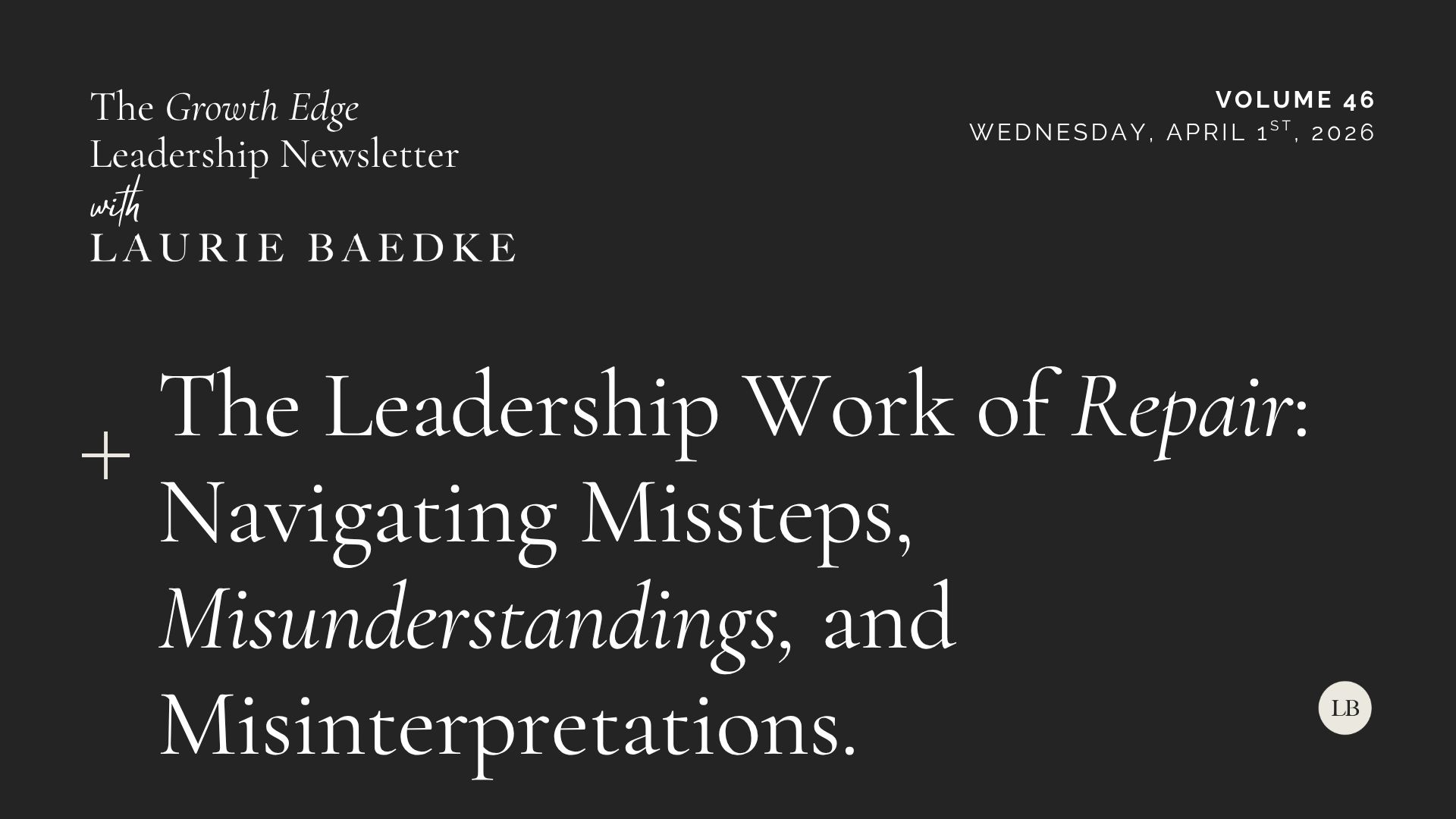
In leadership, we often celebrate alignment, chemistry, and shared vision. We highlight the partnerships that “just work.” But what’s far less discussed, and far more instructive, is what happens when they don’t.
In a recent episode of The Curiosity Shop, two thought leaders that I admire deeply, Brené Brown and Adam Grant, offer something rare: an unfiltered look at how their professional relationship nearly didn’t happen. Their early interactions were marked by misunderstanding, misinterpretation, and, by their own admission, missteps on both sides.
It’s easy to assume that two of the most respected voices in leadership and organizational psychology would have seamlessly aligned from the start. They didn’t. And that’s precisely what makes their conversation so valuable.
Because what they model is not perfection, but repair.
The Leadership Lesson: Credibility is Built in the Messy Middle
What struck me most was not simply that misunderstandings occurred. That is inevitable in any meaningful professional relationship.
What stood out was their willingness to revisit those moments with candor.
They didn’t gloss over the discomfort. They didn’t rewrite the narrative to make themselves look more polished or prescient. Instead, they acknowledged:
→ Assumptions they made too quickly
→ Judgments they didn’t fully examine
→ Communication gaps that could have been handled differently
This is where leadership lives. Not in avoiding friction, but in how we navigate it.
In healthcare and other high-stakes environments, leaders often feel pressure to project certainty, composure, and control. But the unintended consequence is that we can become reluctant to acknowledge when we’ve gotten it wrong.
And yet, trust is not built on the absence of mistakes. It is built on how we respond to them.
A Framework for Leaders: From Misstep to Meaningful Repair
There are three leadership practices embedded in their exchange that are worth elevating and applying.
1. Name the Moment, Accurately and Without Defensiveness
Too often, when tension arises, leaders either avoid it or dilute it.
Brown and Grant do neither. They revisit their early interactions directly, naming what felt off and why. This is not about assigning blame, it’s about establishing a shared understanding of reality.
For leaders, this requires discipline:
→ Resist the urge to defend your intent prematurely
→ Focus first on understanding impact
→ Be willing to hear how your actions were experienced, not just how they were intended
Clarity is the foundation of repair.
2. Own Your Contribution, Fully
What makes their exchange powerful is mutual accountability.
There is no posturing. No one positions themselves as the sole “right” party. Each reflects on their own role in the breakdown.
This is where many leaders fall short.
Ownership is often partial:
💡 "I'm sorry if that came across the wrong way."
💡 "That wasn't my intention."
But high-trust leaders go further. They ask:
﹖ Where did I contribute to the misunderstanding?
﹖ What assumptions did I make?
﹖ What would I do differently now?
This level of ownership does not diminish authority. It strengthens credibility.
3. Choose Curiosity Over Certainty
Fittingly, their podcast is titled The Curiosity Shop. And curiosity is the through line of their repair.
Instead of staying anchored in their initial interpretations, they demonstrate a willingness to re-examine them. To ask better questions. To consider alternative perspectives.
In leadership, certainty can feel efficient, but it is often incomplete.
Curiosity, on the other hand:
→ Slows us down just enough to see more clearly
→ Expands our understanding of others
→ Creates space for relationships to evolve
Especially in complex organizations, curiosity is not a soft skill. It is a strategic one.
Why This Matters for Leaders
In my work with healthcare executives and physician leaders, I see a consistent pattern: high performers often hold themselves, and others, to exceptionally high standards.
That drive fuels excellence. But it can also create environments where mistakes are quietly buried rather than constructively addressed.
The cost is significant:
→ Erosion of trust
→ Missed opportunities for learning
→ Relationships that plateau instead of deepen
What Brown and Grant model is an alternative path.
One where:
🎯 Missteps are acknowledged, not avoided
🎯 Conversations are revisited, not dismissed
🎯 Relationships are strengthened through honesty, not protected through silence
This is the work of mature leadership.
Put It Into Practice
Consider one professional relationship, current or past, where there may be unresolved tension, misalignment, or simply an unspoken misunderstanding.
Ask yourself:
﹖ Is there a conversation worth revisiting?
﹖ What might I have contributed that I haven’t fully owned?
﹖ How could I approach this with curiosity rather than certainty?
Then, take one step.
Not to resolve everything, but to open the door.
Closing Reflection
Leadership is not defined by flawless execution. It is defined by the courage to engage when things are imperfect.
The leaders we trust most are not those who never misstep. They are the ones who are willing to return to the moment, acknowledge what was missed, and move forward with greater clarity and intention.
Repair is not a detour from leadership.
It is the work itself.
I'm rooting for you!