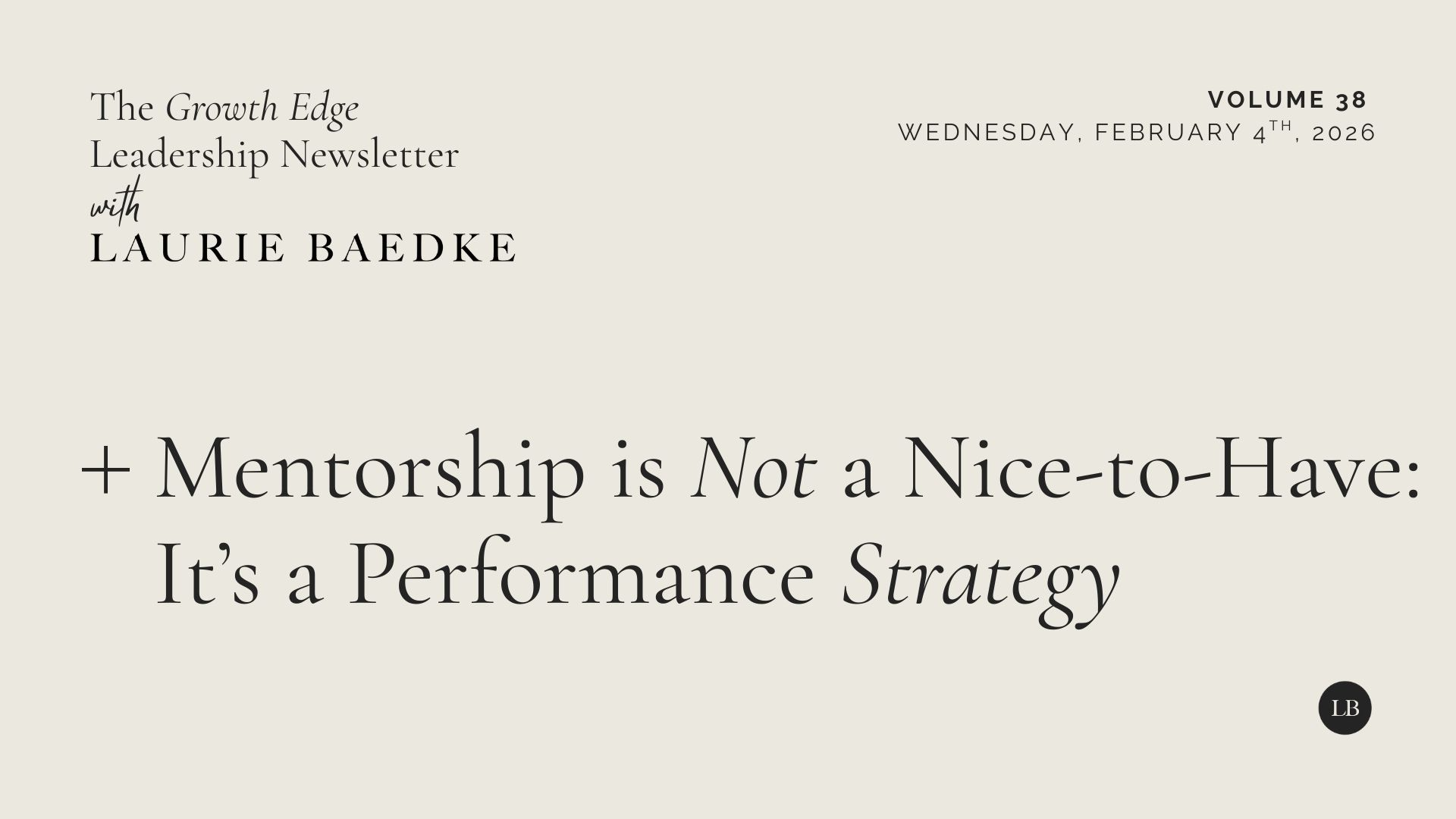
Mentorship is often talked about as a generous act. A “good leader” behavior. Something nice to do when you have time.
That framing sells it short.
Mentorship isn’t a soft extra layered on top of “real work.” It is real work. And when done well, it’s a powerful performance strategy; for individuals, teams, and organizations.
At its core, mentorship accelerates learning. It shortens the distance between where someone is and where they’re capable of going. It helps leaders avoid preventable mistakes, recognize patterns sooner, and build confidence faster.
In environments where the stakes are high and the margin for error is small, that matters.
The Hidden Cost of Under-Mentoring
When mentorship is left to chance, we see predictable consequences:
• Slower development of emerging leaders
• Burnout from unnecessary trial-and-error
• High performers who disengage because they feel unseen or unsupported
• Organizations that scramble to fill leadership gaps instead of growing talent intentionally
In other words, the absence of mentorship doesn’t just affect individuals. It shows up in retention, readiness, and results.
Strong organizations don’t rely on luck to develop leaders. They build structures, expectations, and cultures that support growth on purpose.
Why Mentorship Fails When It’s Left to Chance
In most organizations, mentorship doesn’t fail because leaders don’t care. It fails because we treat it as a personal preference instead of a leadership system.
We praise mentoring in principle, but rarely design for it in practice. We assume it will happen organically, through chemistry, goodwill, or extra effort from already busy leaders. And when that’s the case, mentorship becomes inconsistent and inequitable.
The most confident people ask. The busiest leaders defer.
And those who would benefit most often hesitate, unsure if they’re worthy of someone’s time or attention.
This isn’t a motivation problem. It’s a design problem.
High-performing organizations don’t leave critical capabilities to chance. We don’t “hope” leaders learn financial stewardship, clinical judgment, or strategic thinking through osmosis. We build structures that make success more likely.
Leadership development deserves the same rigor.
When mentorship is embedded into expectations, not treated as an extracurricular, it becomes a force multiplier. Learning accelerates. Judgment sharpens. And leaders spend less time recovering from avoidable missteps.
Well-designed mentorship reduces friction in the system. It lowers cognitive load, shortens learning curves, and creates earlier clarity in moments that matter. And importantly, it supports both performance and well-being, two outcomes that are too often positioned as competing priorities.
Mentorship, done well, is not an act of generosity. It’s an investment in leadership capacity.
What Mentorship Is. And What It’s Not.
Mentorship is not casual advice-giving. It’s not favoritism. And it’s not a one-off coffee meeting.
Effective mentorship is relational and disciplined. It’s a commitment to perspective-sharing, pattern recognition, and honest feedback, grounded in trust and mutual respect.
And importantly, mentorship is not reserved for early career professionals. Leaders at every level need trusted guides, especially as roles become more complex and more isolating.
Experience doesn’t eliminate the need for mentorship. Complexity increases it.
Put It Into Practice
If mentorship truly is a performance strategy, it deserves intention, not someday thinking.
Here are a few simple, meaningful ways to act on that this week:
→ Name your growth edge.
Identify one area where you’re learning through trial-and-error alone. Ask yourself: What perspective would accelerate this? Then consider who has navigated something similar and reach out.
→ Shift from availability to intentionality.
If you mentor others, don’t wait for ad hoc requests. Proactively identify one person whose growth matters to you and schedule a purposeful conversation focused on development, not updates.
→ Normalize guided growth.
Whether you’re early in your career or deeply seasoned, say out loud that you value mentorship. When leaders model this, it gives others permission to seek support rather than struggle silently.
Mentorship doesn’t require perfection.
It requires presence, curiosity, and consistency.
Remember this:
Investing in people is not separate from performance.
It’s how performance is built.
I'm rooting for you!
CURATED PROFESSIONAL RESOURCES
for the leader who wants to dig a little deeper
The Power of Mentorship and Building the Next Generation of Leaders, Forbes
Mentorship Done Right (and Wrong): What Every Healthcare Leader Needs to Know, Dr. Ruth Gotian on the Growth Edge Leadership Podcast
Weave Mentorship Into the Fabric of Your Organization, Andy Lopata