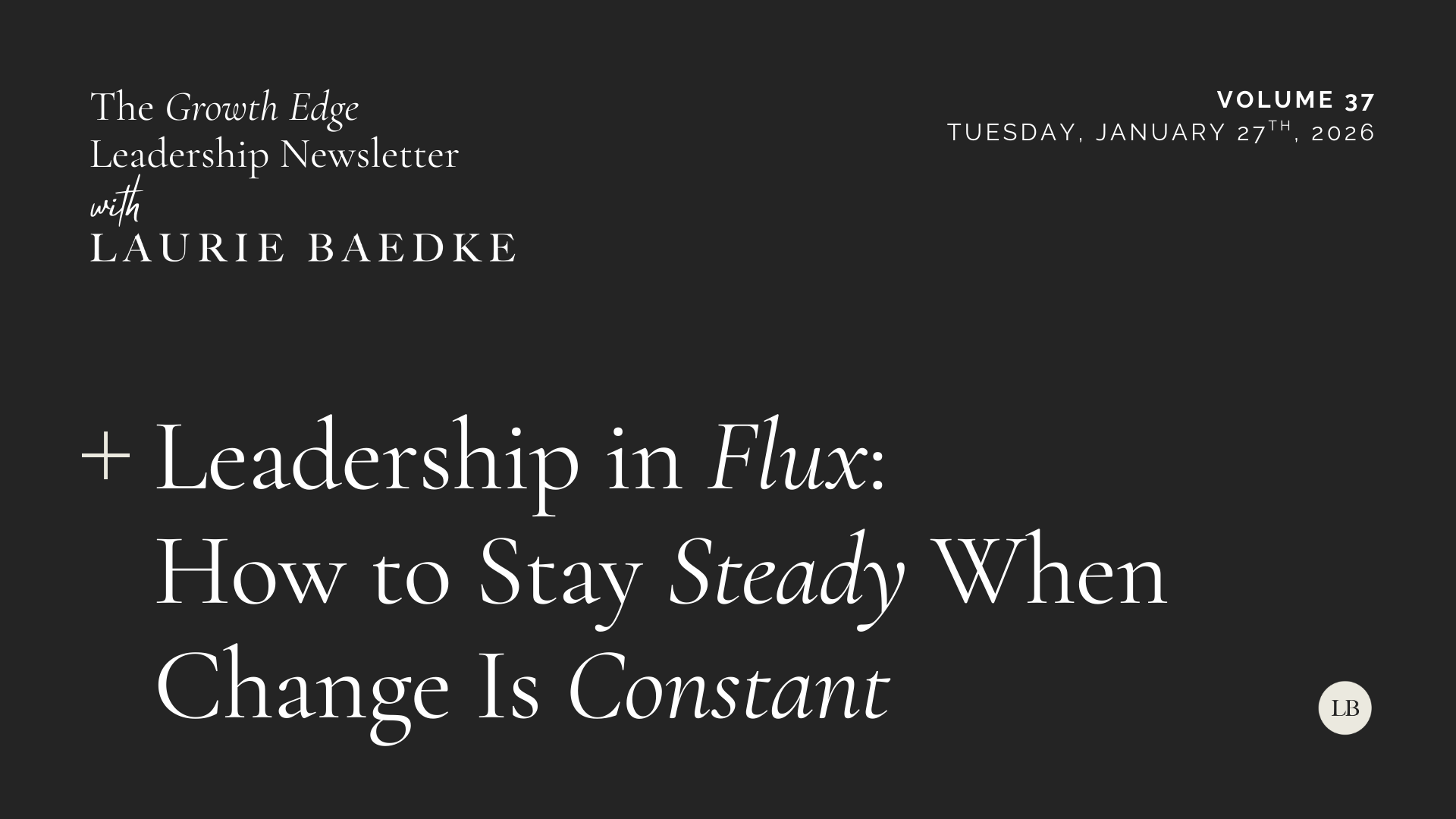
For many leaders today, change no longer feels episodic. It feels ambient.
New technologies. Ongoing restructures. Persistent staffing gaps. Shifting strategies and funding models. At times, the pace can be unrelenting.
The data supports what you’re feeling. Gartner reports that employees experienced an average of 10 planned enterprise changes in a single year, up from just two less than a decade ago. At the same time, willingness to support those changes has dropped by nearly half.
The takeaway is sobering: the volume of change is rising, while human capacity for it is shrinking.
In environments like this, leaders often feel pressure to move faster, to decide quickly, communicate constantly, and keep pushing forward. But that instinct, while understandable, is often what erodes trust, clarity, and sustainability over time.
This moment doesn’t require faster leaders, but rather, steadier ones.
What Steady Leadership Actually Looks Like
Steady leadership is often misunderstood as passive or slow, but I’ve come to realize that it’s neither.
Steadiness is an active discipline. It’s the ability to remain grounded enough to think clearly, decide intentionally, and communicate consistently, especially when conditions are unstable.
In practice, steady leaders do a few things exceptionally well:
-
They regulate urgency. They can distinguish between what is truly time-sensitive and what simply feels urgent.
-
They name what’s known and unknown. People can tolerate uncertainty; what they struggle with is silence or ambiguity.
-
They anchor to what won’t change. Values. Standards. How people are treated. What quality looks like.
The leaders I coach who navigate change best are the ones who provide orientation when others feel disoriented.
The Real Risk of Leading in Constant Motion
Here’s the larger risk leaders face in seasons of sustained change: reactivity becomes the culture.
Slow your mind before you speed up your decisions.
When leaders move too fast for reflection:
-
Decision quality declines.
-
Teams stop asking questions and start guessing.
-
Exhaustion gets normalized.
-
Trust erodes, not because leaders don’t care, but because people feel unmoored.
Steadiness comes down to controlling your response to change, and, by extension, what your team learns to expect from you.
Put It Into Practice: Three Steadiness Practices That Actually Work
Rather than adding more tools or frameworks, I often encourage leaders to focus on a small set of repeatable practices that stabilize both thinking and behavior.
1. Slow the Decision, Not the Progress
Not every decision deserves the same speed.
Before acting, ask:
-
What truly needs to be decided now?
-
What would improve if we gave this 24-48 hours of thought?
-
Who needs to be involved to get this right, not just done?
Put it into practice: This week, identify one decision you’re tempted to rush. Create a brief pause: one additional conversation, one night of sleep, one clarifying question. Notice how that changes the outcome.
2. Create One Predictable Rhythm During Change
Change feels exhausting when everything feels fluid.
Leaders can counter this by introducing one simple, predictable rhythm that helps people orient and recalibrate.
Examples:
-
A 15-minute weekly huddle focused solely on updates and questions.
-
A standing agenda item during periods of change: “What’s clearer? What’s still unclear?”
-
Brief check-ins with key team members: “What’s feeling heavy right now?”
Put it into practice: Choose one rhythm, not several, and commit to it for the next 30 days. Consistency matters more than sophistication.
3. Manage Your Capacity Like a Leadership Asset
Steady leadership requires emotional regulation, presence, and judgment, all of which draw from finite reserves.
When leaders neglect their own capacity, they burn out, becoming less available, less patient, and less clear.
Put it into practice: Identify one non-negotiable that protects your capacity this month:
-
A protected transition between meetings.
-
One evening a week that is truly off-grid.
-
A monthly conversation with someone who helps you think clearly.
Small boundaries, consistently held, preserve leadership effectiveness over time.
Leading Through Change with Intention
Leadership in flux is about staying centered while guiding your team through it.
Wherever you are leading right now, in a clinic, a boardroom, a classroom, or a team that’s in transition, my hope is that you’ll remember: you can’t always calm the waters, but you can become a steadier, more strategic captain for your team.
I'm rooting for you!
CURATED PROFESSIONAL RESOURCES
for the leader who wants to dig a little deeper
Employees Are Losing Patience with Change Initiatives, HBR
What Leaders Need to Know About Change, Taylor Harrell, TEDxSDSU